
'On hard cases like this one, the Supreme Court has only episodically stood against Parliament and the executive government.' 'I worry that this decision sets a precedent where President's rule is imposed in another state... and during the operation of President's rule, the state is fundamentally altered.'
A bench headed by Chief Justice Dipak Misra made it clear that it would not allow any plea now seeking to intervene in the ongoing proceedings, saying that they would be 'cruelly' rejected.

Outgoing Chief Justice of India BR Gavai defends the Supreme Court's verdict on governors' powers, emphasizing the principle of separation of powers and judicial independence.

The Centre has rejected claims that the new definition of the Aravalli range will allow large-scale mining, asserting that 90 per cent of the region will remain protected and citing a Supreme Court-ordered freeze on new mining leases.
The Supreme Court of India has ruled that the actions of governors and the President in granting, withholding, or reserving assent to bills are not subject to judicial review, emphasizing the separation of powers.

Justice Surya Kant has been appointed as the 53rd Chief Justice of India, succeeding Justice Bhushan R Gavai. He will assume office on November 24 and serve until February 9, 2027.
Underscoring the 'presumption of constitutionality in favour of law', the Supreme Court on Tuesday said petitioners challenging the waqf law needed a 'strong and glaring' case for interim relief.

The Supreme Court of India has ruled that informing an accused of the grounds for their arrest is not a formality but a mandatory constitutional requirement. The court declared the arrest of Vihaan Kumar, who was accused of financial fraud, as unconstitutional and ordered his immediate release. The ruling emphasizes the importance of procedural safeguards in criminal law and highlights the fundamental rights of arrested individuals. The court also expressed disapproval of the police's treatment of Kumar, including handcuffing and chaining him while he was in the hospital.

The Supreme Court of India has emphasized the importance of individual liberty, setting aside a Himachal Pradesh High Court order that cancelled bail for an accused in an attempt-to-murder case. The Supreme Court found no material to support the cancellation, stating that courts should be cautious about interfering with an individual's freedom.

AIFF asks clubs to confirm participation in delayed ISL

iPhone maker tells Delhi HC the antitrust watchdog has no jurisdiction to consider its global turnover.

The Calcutta High Court overturned a single bench order that annulled the appointments of 32,000 primary school teachers in West Bengal, stating that irregularities were not proven in all recruitments. The decision brings relief to the teachers and is seen as a boost for the TMC-led state government.

An investigation has been launched into the authenticity of the disability certificate of Prashant Kumar Singh, who resigned as GST Deputy Commissioner in protest against remarks made against Chief Minister Yogi Adityanath. The probe was initiated following a complaint filed in 2021.

The Supreme Court on Thursday held that the Governor can reserve a bill for consideration of the President even in the second instance, when the bill is again sent by the state assembly to him whether in its amended or unamended form.

Chaitanya Baghel, son of Congress leader Bhupesh Baghel, was released from jail after being granted bail in cases related to the alleged liquor scam in Chhattisgarh. The release was met with celebration by Congress supporters.
'It has changed the political character of India by ejecting socialism as an ideology from the Constitution of India.'

InterGlobe Aviation, the operator of IndiGo, has approached the Delhi high court seeking a refund of over Rs 900 crore it claims to have paid as Customs duty on aircraft engines and parts re-imported into India after overseas repairs. The petition came up for hearing on Friday before a bench of Justices Prathiba M Singh and Shail Jain.

'We have already said that our judgment is only in the interregnum till the Act comes into play. These small things could have been easily taken care of. Anyway, we will seek the views of Justice Rao and issue a clarification.'
'From the email on record placed before me, it is very difficult to conclude that AIFF had persuaded FIFA to send the emails to enable AIFF to seek for modification of the Constitution.

Referring to the enactment of the Chhattisgarh Auxiliary Armed Police Force Act, 2011 which created a trained force to aid and assist the security forces in maintaining law and order in the state, the bench said in its view it cannot be said to be an act of contempt of the order of 2011 passed by this court.
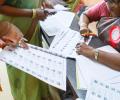
'Even today illegal foreign immigrants live in Assam and their names might be on the voters list. This we can get rid of only by doing SIR.'

We must heed what the CJI has said. Challenging every judgment of the central government is inviting chaos, asserts Shreekant Sambrani.

Several opposition MPs have submitted a notice to the Lok Sabha Speaker to move a motion for the removal of Madras High Court Judge G R Swaminathan over his order regarding a temple lamp.
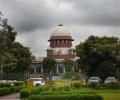
The Supreme Court has sought the Centre's response on a plea seeking the implementation of the 2023 Nari Shakti Vandan Act, which reserves one-third of seats for women in the Lok Sabha and state assemblies.

'The time has come to have a relook at the Constitution as every document has a shelf life.'

Current situation risks rendering ongoing operations untenable: ISL clubs to AIFF
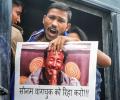
The Centre and the Union Territory of Ladakh administration have accused jailed climate activist Sonam Wangchuk of attempting to instigate Gen Z for protests, drawing parallels to unrest in Nepal, Bangladesh, and the Arab Spring.

With TDP and YSRCP trying to score political points, the sacred laddu may well create a storm in days to come.

A group of US lawmakers has written to the Indian Ambassador to the United States, urging a fair and timely trial for activist Umar Khalid, who has been detained under the UAPA.

Activist Sharjeel Imam has moved the Supreme Court challenging a Delhi High Court order denying him bail in a case linked to the 2020 Delhi riots. The High Court had denied bail to several individuals, emphasizing that conspiratorial violence under the guise of protests cannot be allowed.

It is shameful that Kashmir Times has been attacked in the way it has and that Anuradha Bhasin has not found more voices to speak in support of her and her paper, points out Aakar Patel.

In a federal democracy, the people must have a say (indirect or direct) in an office as important as that of governor. Especially in a governor who can now effectively veto a bill by simply refusing to sign it, argues Harishchandra.

The Supreme Court on Friday sought responses from the Centre, Uttar Pradesh government and others on a plea filed by a woman advocate alleging illegal detention and custodial sexual assault at a police station in Noida.

For the longest time, the court did not even hear important matters that the government did not want it to. Of late, it has begun to form benches. Meanwhile a lot of the damage has been done and continues to be done, asserts Aakar Patel.

Following a directive from the Supreme Court, the AIFF has been asked not to negotiate new terms of the MRA with FSDL, the apex governing body's commercial partner running the ISL, until a final judgment is delivered in the AIFF draft constitution case.

Chief Justice of India Bhushan Ramkrishna Gavai retired, reflecting on his career, commitment to the Constitution, and social justice.

Justice Surya Kant, who was elevated as a judge of the Supreme Court on May 24, 2019, would have a tenure of over 1.2 years as the CJI. He is due to retire on February 9, 2027.

A bench comprising Chief Justice B R Gavai and Justice K Vinod Chandran took note of the submissions of a lawyer that the plea, filed through TVK's secretary Aadhav Arjuna, be listed for hearing.
The Supreme Court has declined to urgently hear pleas seeking a stay on anti-conversion laws enacted by several states, including Uttar Pradesh, Gujarat, and Madhya Pradesh. The matter is now scheduled for hearing in December.

The Supreme Court has sought a response from the Election Commission on a plea by Trinamool Congress MPs alleging irregularities in the revision of electoral rolls in West Bengal.
